
There is a growing interest in digital ecosystems, including the emerging AI assistants to ease or remove the burdens in older adults’ lives such as changing homes, living with a new health condition, adapting to a new living environment, transitioning from working to retirement and so on.
The digital ecosystems for the life-course, also called Active Assisted Living (AAL) systems, are expected to include both the technologies and all the decision makers and people affected by the technologies. The existing and the emerging systems aim to answer the needs of an aging population in their wish to stay connected, social, and independent, as well as to age with more dignity and enjoyment. Those include – but not restricted to – technologies such as smart homes, robotic systems, tele-health, tele-care monitoring, self-care technologies, but also community services and environments.
However, there are many challenges involved in developing these types of systems, given more than 1 in 6 over 65s lack the basic skills to use the internet successfully. Developing and deploying innovative multi-stakeholder systems for an emerging, not yet fully explored, social change is a major challenge. Growing older, being old and belonging to a demographic group can all mean different things at different times. The abilities, the life experiences of older adults, and the cultural and social infrastructures that surround them are all diverse. Still, the underlying principles in the technology making can be built on a limited focus on age-related deficits and negative stereotypes.
Frequently, older people may face some sort of physical, sensory or cognitive limitations associated with the biological ageing process, yet they would reject being reduced to such limitations, and would not identify with deficit-oriented care. The market for AAL systems and technologies is not yet well enough established to deal with all of these complexities.
This Special Thematic Session (STS) is following up with our previous calls (AAL Forum 2018, ICCHP 2018, 2022 & 2024) and aims to create a forum to discuss the major issues related to assistive and inclusive technologies for older people. Our aim is to define the changing role of the technologies within the changing context and perceptions of ageing.
Topics of interest include, but are not limited to:
AAL for Individuals and Communities:
- Emerging social needs and their reflection in AAL products
- Designing for the new norms after Covid-19 (independence vs. interdependence)
- New and emerging digital artifacts, environments and technologies
- AAL in a fast-changing world (health, finance, education)
AAL at Scale:
- Cities, governmental services
- Public services, smart cities and support to leave home to participate in societal life
- Citizen centric digital systems
- Mobility services, including the automotive sector
- Hospitals, care homes, day care and therapy centers
- Social environments (restaurants, event spaces)
Social Challenges and Opportunities for AAL systems:
- Intersectional deficit-oriented perspectives in AAL
- Getting it right: ethics, legal aspects, security and privacy
- Impact assessment
- Development and evaluation with older participants
- Broader societal impact, and business models for inclusive AAL services
AAL across borders:
- Rural, urban and other diversities
- Cross-cultural experiences and mobility (migration, relocation)
- Low cost AAL: rethinking AAL business models for low-income geographies
Chairs
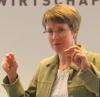
Jean Hallewell Haslwanter, TU Vienna, University for Applied Sciences Upper Austria
Özge Subasi, Media and Visual Arts, Koc University Istanbul
Paul Panek, Technical University Vienna