
Surveys in Europe and the USA show that around 10-15% of the population are deaf or hard-of-hearing. They face communication access barriers, but there is no one-size-fits all solution. They exist on a multi-dimensional spectrum with diverse perspectives and access priorities. Some, especially those who identify as hard of hearing, use a spoken language as their preferred, or first language. Others, especially those who identify as deaf often use a signed language, as their preferred, first language. Others are bilingual with intersectional identities and language use. Deaf and hard of hearing people broadly rely on information and communication technology (ICT) to tackle communication access barriers. There are many ways in which ICT can provide support, for example, transcription from speech to text, captioning/subtitling, lipreading assistance tools, immersive eXtended Reality (XR) systems, and artificial intelligence (AI)-based natural language processing, including text-to-text, text-to-speech, speech-to-sign-language and sign language-to-speech technologies. On the frontier of current ICT, avatar-based systems, used on 2D screens or in XR environments, have the potential for enhancing communication and collaboration for those whose preferred language is signed, and for whom a spoken language, albeit in written form, is a second language.
The Special Thematic Session (STS) invites contribution on all aspects of the accessibility, usability, and intelligence of ICT-based systems and applications that make written, spoken language, information, and communication more accessible, including:
- Language accessibility in the context of deaf and hard-of-hearing persons.
- Multimodal integration of information with language accessibility in the context of deaf and hard-of-hearing persons.
- Sign Language learning and accessibility for parents of deaf children.
- Teaching support for second-language learners in the context of deaf and hard-of-hearing persons.
- Deep learning for accessibility in the context of deaf and hard-of-hearing persons.
- Generative AI for accessibility in the context of deaf and hard-of-hearing persons.
- Using Extended Reality (Mixed Reality, Augmented Reality, Virtual Reality) for accessibility in the context of deaf and hard-of-hearing persons.
- Universal and graphical design of user interfaces, websites and digital products for accessibility in the context of deaf and hard-of-hearing persons.
- ICT evaluation methodologies for the quality of accessibility in the context of deaf and hard-of-hearing persons.
- Other ICT topics that enhance accessibility for deaf and hard of hearing persons.
Chairs

Raja Kushalnagar, Gallaudet University
Matjaž Debevc, AccessibleEU Slovenia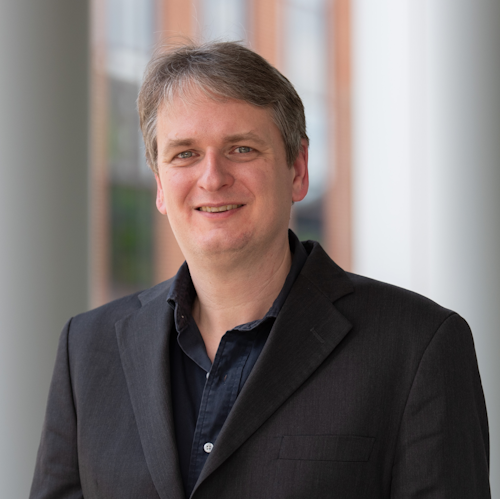
Christian Vogler, Gallaudet University