
This session addresses the largely untapped global tourism market of persons with disabilities—estimated at approximately 15% of the world’s population (around 1.3 billion individuals)—as well as more than 1 billion people aged 60 and above. Together, these groups represent a global disposable income estimated at USD 13.1 trillion. Despite the scale of this market, accessibility in mainstream tourism remains insufficient: an estimated 700,000 hotels and resorts worldwide with over 16 million rooms, platforms such as Airbnb with more than 4 million hosts and 6 million listings, over 100,000 museums, 2,500+ UNESCO World Heritage Sites, and countless public spaces across regions still lack adequate accessibility for travelers with disabilities and older adults.
This session invites empirical, conceptual, methodological, and practice-oriented contributions that examine, evaluate, or advance innovative approaches to inclusive tourism. Submissions may focus on the individual, social, and economic impact of accessible tourism, and may include, but are not limited to, the following thematic areas:
- Accessibility in the built environment, culture, natural landscapes, sports facilities, and religious sites
- Smart and sensor-enhanced environments enabling independent and safe travel
- Data generation, data analytics and information systems for user needs assessment, accessibility validation, and decision support
- Accessibility and disability-aware gastronomy, restaurants, and catering
- User-centred and participatory design methods, including design thinking, co-creation, and peer-to-peer counselling
- Disability-related service preparation, travel planning, booking processes, and operational accessibility management, including methodological frameworks for systematic assessment and intervention planning
- International cooperation and knowledge exchange in accessible tourism R&D
- New business models, capacity-building initiatives, and training concepts aimed at tourism boards, municipalities, hotel and restaurant chains, DMOs, and other tourism stakeholders, as well as technology and service providers
- Quality assurance, certification schemes, and standardized assessment tools that enhance transparency, trust, and demand while reducing uncertainty and frustration among travelers with disabilities
- High-quality evaluation and feedback systems enabling continuous improvement and long-term accessibility governance
Strengthening research and development in these areas is essential for enabling the tourism sector to deploy high-performing, scalable, and harmonized solutions relevant to both developed and developing regions. Advancing accessible tourism will contribute toward closing the substantial gap between what providers perceive as accessible and what travelers with disabilities actually experience. Ultimately, this work aims to activate professionals, businesses, and policy stakeholders to systematically contribute to a more inclusive and future-ready tourism ecosystem.
This session is organized in cooperation with PlanetAbled and the Hilfsgemeinschaft der Blinden und Sehschwachen Österreichs.


Join us in Linz to make tourism accessible!
Chairs

Klaus Höckner, Hilfsgemeinschaft der Blinden und Sehschwachen Österreichs
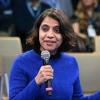
Neha Aurora, PlanetAbled