
Accessibility of digital technologies has become a key area of research in our field as the
world has moved to greater individual and societal reliance on these technologies. In the
period 2020 to 2025 1457 papers indexed in the ACM Digital Library alone included the term
accessibility in their title. About 10% of these papers do not relate to accessibility in relation
to disabled and older people, as they are concerned with other users of the term (e.g.
accessibility of climate data to scientists around the world), but this still means about 1310
papers related to our field.
However, how to define and measure accessibility in our field still remains less than clear.
Many researchers now treat accessibility as a given, and do not define exactly what they are
discussing or researching. They could be referring to a number of different concepts: the
ability to literally access a digital technology, even if that is more complicated and less usable
than access to the technology for non-disabled users; or compliance with a technical
standard such as WCAG2.2 or EPUB3.3; or that disabled or older users report that they can
use a particular technology. Researchers may also use the general (and possibly
ambiguous) term of accessibility, or more specific terms such as digital accessibility, web
accessibility or mobile accessibility. At the beginning of the century Ben Shneiderman
promoted the concept of universal usability as a slightly different way of thinking about
accessibility, but that has not become particularly common as a term. More recently,
Jonathan Lazar has developed the concept of born accessible as a goal in relation to
accessibility.
However, using any of these definitions, there are still interesting issues to be addressed. If a
digital technology is accessible to blind users, does that mean it is or should also be
accessible to Deaf users or wheelchair users? And what about older users, are their needs
and behaviours relevant to the concept of accessibility? Does accessibility mean the same
level of accessibility and usability for all users? This raises the further interesting question of
what is the relationship between accessibility and usability? Is accessibility just a broadening
of the concept of usability, to apply to all users, rather than just “specified users” (to quote the
ISO definition).
There is also a range of methods for assessing accessibility which may not yield consistent
results when used on a particular digital technology, ranging from automatic testing tools,
through expert evaluations, checklists for use by non-experts to classic user testing. There
are also different methodological approaches, including universal design, design for all and
inclusive design, although whether there are really differences between these approaches is
open to debate. Finally, the use of AI in both ensuring and measuring accessibility has
recently begun to be extensively researched and may change the landscape of accessibility
research.
Papers in this Special Thematic Session (STS) may address but are not limited to:
- Discussions and critiques of the concept of accessibility
- Discussions, comparisons and critiques of the methodological approaches to
accessibility including universal design, design for all and inclusive design - Discussions, comparison and critiques of different methods of assessing accessibility
- New methods for accessing accessibility
- Use of AI to ensuring and measuring accessibility
Chairs

Helen Petrie, University of York
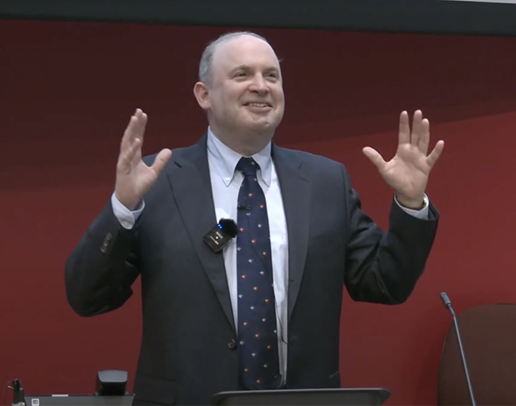
Jonathan Lazar, University of Maryland, USA